
Planning · Adi Kailash · Kailash Mansarovar
Adi Kailash vs Kailash Mansarovar: Which Should You Choose?
ByHimanshu, Founder· Pithoragarh ·
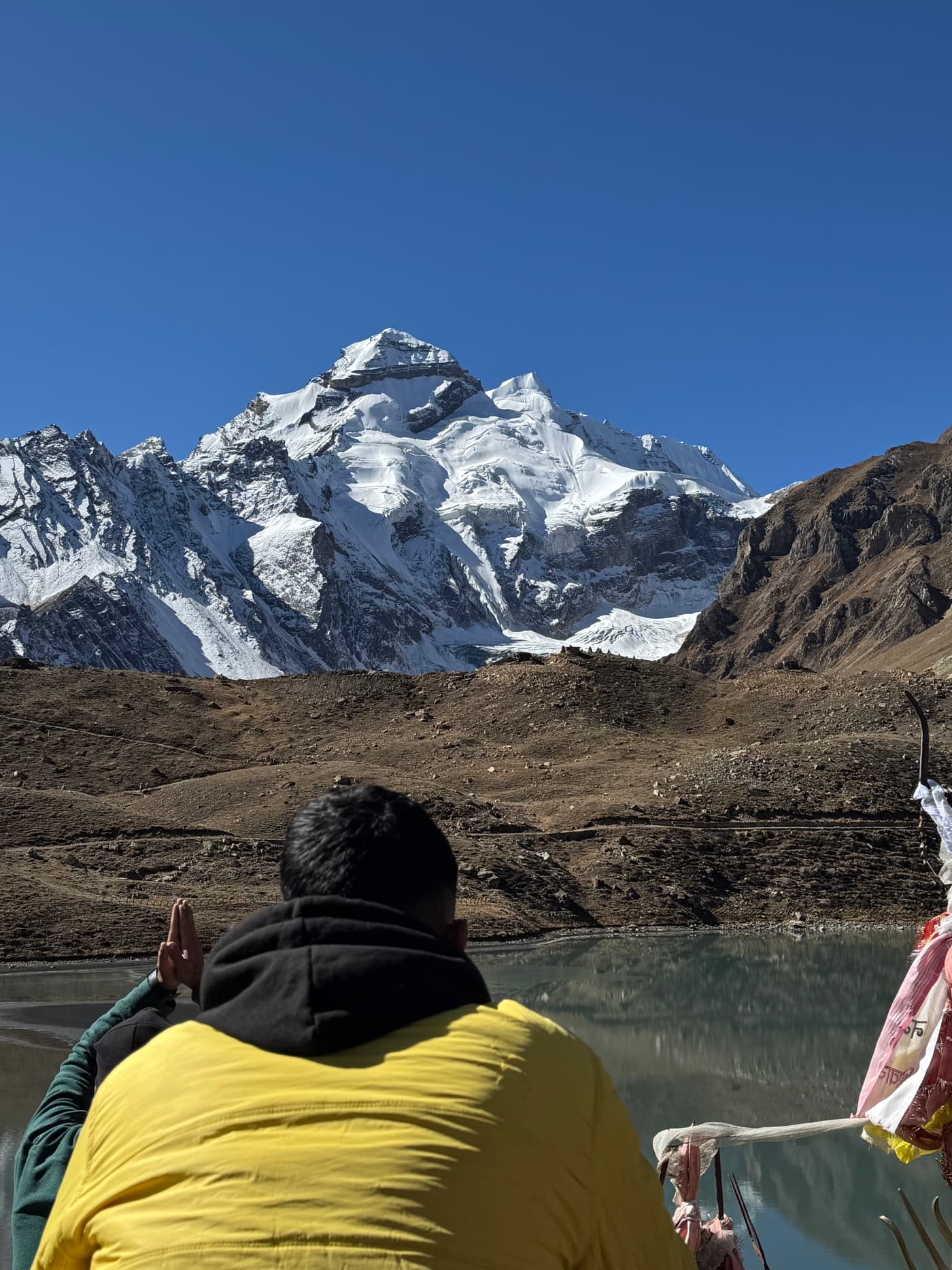
One of the first questions yatris ask us is some version of: “Is Adi Kailash the same as Kailash Mansarovar?” It isn’t. They are two different sacred mountains in two different countries, and the journeys have almost nothing in common — not the paperwork, not the budget, not the fitness needed. Which one is right for you depends on what you can honestly commit.
The two mountains, in one minute
Mount Kailash stands in Tibet, beside Lake Mansarovar. Reaching it is an international journey: passport, Chinese visa, special permits, and a parikrama on foot that crosses the Dolma La pass at roughly 5,630 m. It asks for two weeks or more of your time and serious physical preparation.
Adi Kailash, also called Chhota Kailash, rises to about 5,945 m entirely within India, at the head of the Vyas Valley in our own Pithoragarh district. Its resemblance to Mount Kailash is striking, and tradition reveres it as one of the Panch Kailash. The darshan point at Jolingkong (around 4,572 m), beside the sacred Parvati Sarovar, is reached by 4x4 — there are no trekking days.
The same road also takes you to Nabhidhang for Om Parvat, where snow settles naturally in the shape of ॐ on the mountain face. The Mansarovar route does not include this darshan; the Adi Kailash yatra gives you both.
Side-by-side comparison
| Adi Kailash | Kailash Mansarovar | |
|---|---|---|
| Location | Uttarakhand, India | Tibet, China |
| Documents | Aadhaar + Inner Line Permit | Passport + Chinese visa + permits |
| Typical cost | ₹16,500–₹37,500 per person | ₹1.8–3 lakh+ per person |
| Days needed | 4–8 days | 10–15+ days |
| Highest point | Jolingkong ~4,572 m, by vehicle | Dolma La ~5,630 m, on foot |
| Physical demand | Short walks at darshan sites | Multi-day high-altitude trek |
| Season | May–June & September–October | May–September |
Who should choose Adi Kailash
Families travelling with elders. The route is vehicle-based, and seniors complete it every season on well-paced itineraries that keep the acclimatisation day at Gunji. We do require a medical fitness certificate from every yatri — our fitness and altitude guide explains what to check with your doctor.
Anyone on a working person’s leave. The full yatra fits inside a week, door to door. Mansarovar needs double that, before you count visa timelines.
Budget-conscious pilgrims. The difference in cost is not small — what a single Mansarovar seat costs could take a whole family to Adi Kailash.
Those who want to go this season. There is no visa queue. The Inner Line Permit is issued at Dharchula, and we file the paperwork for all our travellers.
Who should choose Kailash Mansarovar
If your sankalp is specifically the parikrama of Mount Kailash and a dip in Lake Mansarovar, nothing substitutes for that vow. Plan properly for it: the passport and visa, the bigger budget, the longer leave, and genuine trekking fitness for the Dolma La crossing. Some yatris sensibly do Adi Kailash first — it teaches you how your body behaves above 4,000 m before you commit to something harder.
One honest caution
“Easier” is relative. The Adi Kailash route still crosses 4,300–4,600 m, and altitude does not care how you got there. The single most important thing in any itinerary — ours or anyone else’s — is how fast it climbs to Gunji. Our 7-day routes hold a full acclimatisation day there; the ex-Delhi temple-circuit yatra and the short Express trade it for a quicker schedule and say so plainly. Pick a plan without the rest day only if you are fit and comfortable at altitude. Our best time guide covers which months suit which travellers.
Ready to plan?
Our four routes — ex-Pithoragarh, ex-Kathgodam, ex-Delhi, and the short Darshan Express — start from ₹16,500 per person, with the Inner Line Permit included. Browse the Adi Kailash packages or message us on WhatsApp with your preferred month and group size; final quotes are always confirmed there.
Want help planning this? Talk to us directly.
Chat on WhatsApp